If you’ve ever seen the word “buffalo” in a travel guide, documentary, or safari brochure, you might assume it refers to one animal found around the world. But the truth is more interesting: Cape buffalo and water buffalo are completely different animals, living on different continents and behaving in very different ways.
Understanding the difference doesn’t just make you sound like a wildlife expert — it also helps you appreciate what you’re seeing when you travel, especially if you’re planning a safari in East Africa.
Meet the Cape Buffalo: Africa’s Toughest Herd Animal

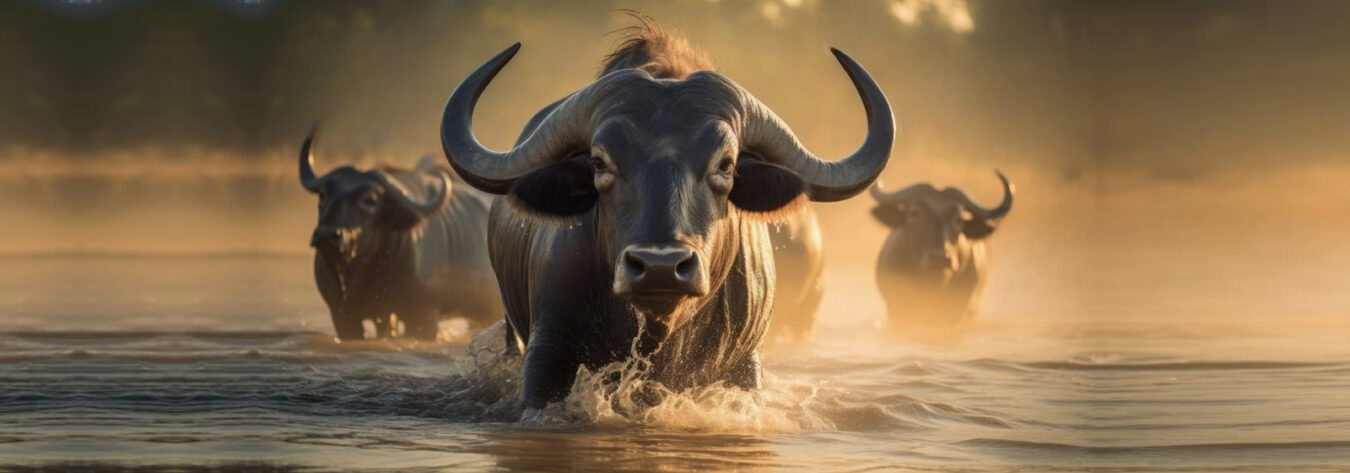
The Cape buffalo (also called the African buffalo) is the species you’ll see on safari in countries like Uganda, Kenya, and Tanzania. It is one of the most iconic animals of the African wilderness — and not just because it is large.
Cape buffalo are famous for their strength, confidence, and unpredictability. Unlike many animals that flee when threatened, Cape buffalo are known to stand their ground. In the wild, they move in powerful herds and can be extremely defensive, especially when protecting calves or when they feel cornered.
This is one reason they are part of Africa’s legendary Big Five – not because they are the biggest, but because they are among the most challenging and dangerous animals for hunters historically, and still among the most respected by safari guides today.
Meet the Water Buffalo: The Wetland Giant of Asia

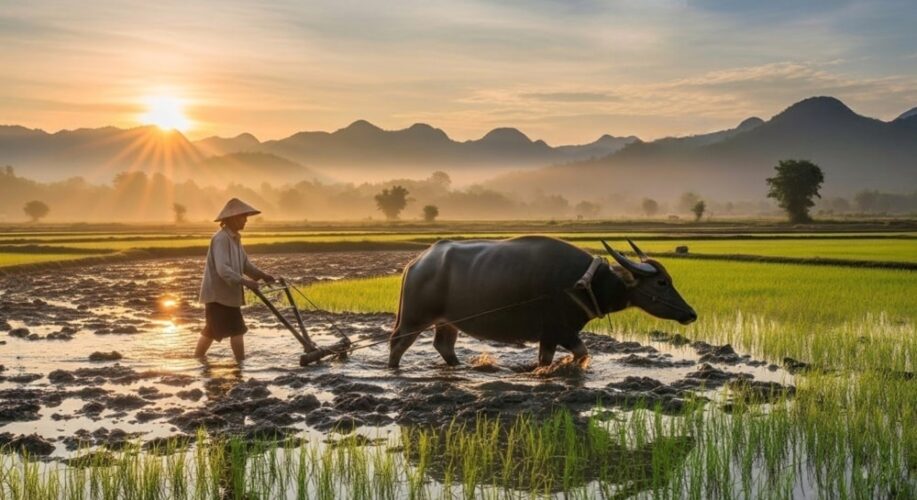
The water buffalo is a different species altogether. You’ll find it mainly in Asia, and in some regions of Europe and Australia. Unlike the Cape buffalo, water buffalo are widely known for being domesticated, meaning many of them live alongside humans and are used in farming, especially in rice-growing regions.
Water buffalo are built for wetlands. They love mud, swamps, and rivers, and you’ll often see them cooling off in water for long periods. They are still strong animals, but they are generally more calm and social, especially in areas where they have lived around people for centuries.
The Easiest Way to Tell Them Apart
Even from a distance, the horns give them away.
Cape buffalo have a very distinctive look, especially the males. Their horns curve outward and upward, and the bases often join together on the forehead to form a thick shield-like structure. Safari guides call this the “boss.” It looks like the buffalo is wearing a helmet.
Water buffalo horns are usually longer and sweep backward in a wide curve. They don’t form the same heavy forehead shield.
Once you learn this, you’ll never confuse the two again.
Why Cape Buffalo Are So Famous on Safari
When you see Cape buffalo in East Africa, you’re not just seeing another grazing animal. You’re seeing a creature that plays a huge role in the ecosystem and in the safari experience itself.
Cape buffalo often move in large herds, sometimes in the hundreds. They create dramatic wildlife scenes — dust rising, calves protected in the center, dominant bulls keeping watch. They also attract predators. Lions, in particular, often follow buffalo herds because buffalo are one of their most important prey animals.
This is why a buffalo sighting can quickly turn into a thrilling safari moment. You may not witness a hunt, but you can feel the tension and energy in the landscape.
So Which One Will You See in East Africa?
If you’re planning a safari in Uganda, Kenya, Tanzania, or Rwanda, the buffalo you’ll encounter is the Cape buffalo – the wild, powerful animal that belongs to Africa’s Big Five.
And when you see one up close – especially a massive bull with a heavy horn boss – you’ll understand why safari guides treat them with such respect.
Ready to Experience East Africa’s Wildlife the Right Way?
A safari becomes more exciting when you understand what you’re seeing – not just the names of animals, but their personalities, behavior, and role in the wild.
Paanvuu Safaris designs East African safaris that go beyond sightseeing. You travel with expert guides, well-paced itineraries, and the kind of storytelling that turns every wildlife encounter into a memory you’ll carry for life.
Reach out today at [email protected] and let’s start planning your next unforgettable African adventure.